The 1RM (One Rep Max) Deadlift Calculator is a powerful tool used by athletes, bodybuilders, and strength enthusiasts to estimate the maximum amount of weight they can lift for one repetition. Understanding your one-rep max is crucial for planning effective training programs, tracking progress, and preventing overtraining or injury. This article explores everything you need to know about the 1RM Deadlift Calculator — its purpose, formulas, benefits, and how to use it effectively.
What Is a 1 Rep Max (1RM) Deadlift Calculator?
Your one-repetition maximum (1RM) is the heaviest load you can lift for a single repetition with proper form. In the case of the deadlift, it reflects your maximum pulling power — the peak strength of your posterior chain, including the glutes, hamstrings, back, and grip.
Testing your 1RM directly can be risky, especially for beginners. That’s why the 1RM Deadlift Calculator is used to estimate your max safely by using lighter weights and higher repetitions.
Why You Should Know Your Deadlift 1RM
Knowing your 1RM is essential for building a structured and progressive training plan. Here are some key reasons:
1. Personalized Training Intensity
When you know your 1RM, you can train at specific intensity levels — for example, 70%, 80%, or 90% of your maximum — to target strength, power, or endurance.
2. Progress Tracking
Monitoring your 1RM over time helps you evaluate your performance and identify strength plateaus or improvements.
3. Injury Prevention
Estimating your 1RM through a calculator helps you avoid the risk of lifting too heavy during testing, reducing the chance of injury.
4. Competition Preparation
For powerlifters and athletes, knowing the deadlift repetition max calculator is crucial for setting realistic goals and determining opening attempts in competitions.
How the 1RM Deadlift Calculator Works
The calculator estimates your one-rep max using mathematical formulas based on the weight lifted and the number of repetitions performed. These formulas are derived from decades of strength training research and observation.
Common 1RM Formulas Used
1. Epley Formula
1RM=w×(1+0.0333×r)1RM = w \times (1 + 0.0333 \times r)1RM=w×(1+0.0333×r)
Where:
- w = weight lifted
- r = number of repetitions
Example:
If you lift 150 kg for 5 reps:
1RM=150×(1+0.0333×5)=175 kg (approx.)1RM = 150 \times (1 + 0.0333 \times 5) = 175 \text{ kg (approx.)}1RM=150×(1+0.0333×5)=175 kg (approx.)
2. Brzycki Formula
1RM=w×3637−r1RM = w \times \frac{36}{37 – r}1RM=w×37−r36
This formula provides accurate results for reps between 2 and 10.
3. Lander Formula
1RM=100×w/(101.3−2.67123×r)1RM = 100 \times w / (101.3 – 2.67123 \times r)1RM=100×w/(101.3−2.67123×r)
Used primarily by strength coaches, it gives slightly conservative estimates, ideal for safe programming.
Each formula gives a slightly different number, but they all help you find a reliable estimated max deadlift without lifting dangerously heavy loads.
Step-by-Step: How to Use the 1RM Deadlift Calculator
Step 1: Warm Up Properly
Perform 5–10 minutes of light cardio, followed by dynamic stretches and warm-up sets with lighter weights.
Step 2: Choose a Challenging Weight
Select a weight you can lift for 3–10 reps with good form. Avoid going to failure.
Step 3: Record Your Data
Note the exact weight you lifted and the number of reps completed.
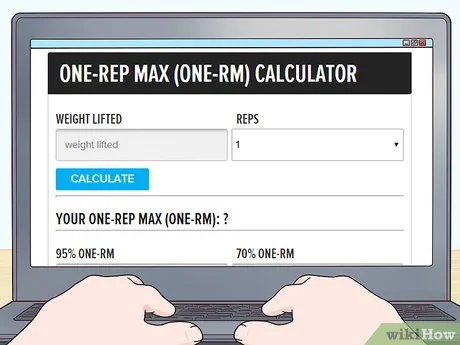
Step 4: Input Data into the Calculator
Enter the weight and reps into the 1RM Deadlift Calculator, and it will instantly estimate your one-rep max.
Step 5: Plan Training Percentages
Once you have your 1RM, use percentages to design your workouts:
- 50–60% → Warm-up / Technique work
- 65–75% → Hypertrophy range
- 80–90% → Strength range
- 90–100% → Max effort
Benefits of Using a 1RM Deadlift Calculator
1. Safety and Efficiency
It eliminates the need to lift near your limit, which can lead to injuries if done incorrectly.
2. Time-Saving
You can get accurate strength estimates in seconds without long testing sessions.
3. Versatile for All Levels
From beginners to advanced athletes, the calculator provides value at every stage of training.
4. Goal-Oriented Programming
Knowing your 1RM allows you to tailor your workouts toward specific goals like strength, power, or muscle growth.
5. Motivation and Progress Insight
Seeing your numbers improve over time can be a huge motivational boost and proof that your training plan is working.
How Often Should You Recalculate Your 1RM?
It’s recommended to recalculate every 4–8 weeks, depending on your training cycle. If you notice your working weights feel easier or you complete more reps than before, it’s time to update your 1RM estimate.
For advanced lifters, recalculating every training block helps fine-tune intensity and avoid stagnation.
1RM Deadlift Calculator Training Tips
1. Focus on Form
Always prioritize technique over load. Poor form can lead to back injuries, especially during maximal lifts.
2. Use Proper Equipment
A quality lifting belt, proper shoes, and chalk can significantly enhance safety and grip stability.
3. Incorporate Accessory Exercises
Strengthen your posterior chain with Romanian deadlifts, hip thrusts, and hamstring curls to improve your deadlift max.
4. Manage Recovery
Adequate rest, nutrition, and mobility work are essential for continuous progress and injury prevention.
5. Progressive Overload
Gradually increase your training intensity by adjusting the weight or volume. Consistent small increments lead to long-term strength gains.
Common Mistakes to Avoid When Estimating 1RM
1. Testing Without Warm-Up
Skipping a warm-up can cause poor performance or even injury.
2. Using Too Many Reps
For accurate calculations, use a range of 3–10 reps. More than 10 reps lead to less reliable estimates.
3. Ignoring Form Breakdown
If your form deteriorates, the lift doesn’t count — even if you complete the rep.
4. Not Adjusting for Fatigue
Perform your estimation on a fresh day, not after an intense workout, to ensure accuracy.
Frequently Asked Questions (FAQs)
Q1: Can beginners use a 1RM Deadlift Calculator?
Yes, beginners can safely estimate their 1RM using submaximal weights instead of testing their actual maximum.
Q2: How accurate is a 1RM calculator?
It provides a 90–95% accurate estimate, which is reliable enough for training purposes.
Q3: Should I use the same formula every time?
Yes, for consistent tracking, stick to one formula — such as the Epley formula — to compare progress accurately.
Q4: What is a good 1RM deadlift ratio?
For general fitness, lifting 1.5–2 times your body weight is considered strong. Competitive lifters may exceed 2.5x body weight.
Conclusion
The 1RM Deadlift Calculator is an essential tool for anyone looking to measure strength, structure workouts, and track progress safely. By estimating your one-rep max without performing risky maximal lifts, you gain valuable insight into your power potential while reducing the chance of injury.
Whether you’re a beginner learning the ropes or a seasoned powerlifter refining your technique, using a 1 Rep Max Deadlift Calculator helps you train smarter, lift safer, and achieve measurable results.