Strength training is as much a science as it is an art. Athletes, lifters, and fitness enthusiasts are always looking for ways to track progress, optimize performance, and push their limits safely. Among the key tools in any strength program is the max squat calculator—a simple yet powerful way to estimate your one-repetition maximum (1RM), or the maximum amount of weight you can lift for one complete repetition of the squat.
Whether you’re a seasoned powerlifter or a beginner in the gym, understanding your 1RM is crucial for designing effective training programs. This article explores what a max squat calculator is, how it works, the formulas behind it, and how to use it safely and effectively.
What Is a Max Squat Calculator?
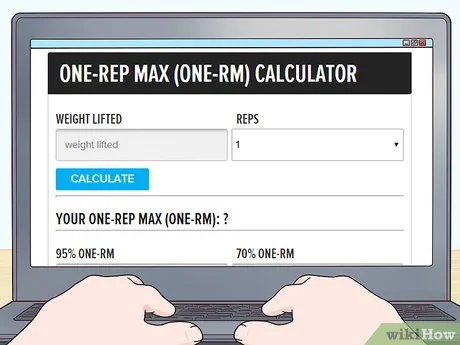
A max squat calculator is an online or app-based tool that estimates your one-repetition maximum (1RM)—the maximum weight you can lift for a single repetition of a squat, while maintaining proper form. Instead of attempting a risky all-out lift, you can input how much weight you lifted for multiple repetitions (say, 225 lbs for 5 reps), and the calculator estimates your theoretical maximum based on that performance.
The calculator relies on mathematical formulas derived from empirical data collected over decades of strength training research. It’s not just for squats—you can use similar 1RM calculators for deadlifts, bench presses, or any major compound movement. However, because the squat is one of the most technically demanding lifts, using a calculator can help prevent injuries while still tracking progress.
Why Knowing Your Max Squat Matters
Your 1RM is a benchmark that reflects your absolute strength in a given exercise. It’s not just an ego number—it plays a practical role in programming your workouts. Here’s why knowing your max squat is so important:
- Progress Tracking:
Over time, your estimated 1RM helps you measure how much stronger you’ve become, even if your day-to-day training loads fluctuate. - Training Program Design:
Many strength programs, like 5/3/1, Starting Strength, and percentage-based powerlifting cycles, are built around working at certain percentages of your 1RM (e.g., 70% for hypertrophy, 85% for strength). - Injury Prevention:
Testing a true one-rep max can be risky, especially for beginners or when lifting without a spotter. The calculator lets you estimate your max safely. - Goal Setting:
Knowing your numbers allows you to set realistic short-term and long-term goals. You can adjust your expectations and training volume accordingly.
The Science Behind the Max Squat Calculator
Several mathematical formulas are used to estimate a lifter’s 1RM. These formulas are based on data collected from athletes performing multiple repetitions at various percentages of their maximum load. While no formula is 100% accurate for everyone (because of individual differences in muscle fiber types, endurance, and technique), most give a reasonably close estimate.
Here are the most common formulas used in max squat calculators:
1. Epley Formula
This is one of the most widely used and straightforward equations:
1RM=w×(1+0.0333×r)1RM = w \times (1 + 0.0333 \times r)1RM=w×(1+0.0333×r)
Where:
- www = weight lifted
- rrr = number of repetitions performed
Example:
If you lifted 225 lbs for 5 reps:
1RM=225×(1+0.0333×5)=225×1.1665=262.5 lbs (approx.)1RM = 225 \times (1 + 0.0333 \times 5) = 225 \times 1.1665 = 262.5 \, \text{lbs (approx.)}1RM=225×(1+0.0333×5)=225×1.1665=262.5lbs (approx.)
2. Brzycki Formula
Another popular method, especially for moderate rep ranges:
1RM=w×3637−r1RM = \frac{w \times 36}{37 – r}1RM=37−rw×36
This tends to give slightly lower estimates for higher rep counts.
3. Lombardi Formula
This one uses an exponential relationship:
1RM=w×r0.101RM = w \times r^{0.10}1RM=w×r0.10
It’s often used for athletes with more endurance capacity.
4. O’Conner Formula
1RM=w×(1+0.025×r)1RM = w \times (1 + 0.025 \times r)1RM=w×(1+0.025×r)
This formula works well for rep ranges between 2–10.
While each formula varies slightly, the estimated values are usually close—often within 2–5% of each other. Most online calculators use one or more of these formulas to give an average estimate.
How to Use a Max Squat Calculator
Using the calculator is simple and quick. Here’s how to do it:
- Warm Up Properly
Start with light sets to loosen up your joints and muscles. Gradually increase the load to reach a challenging working set. - Perform a Set to Near Failure
Choose a weight that allows you to complete between 3 and 10 good-form repetitions. Avoid going to total failure—stop one or two reps shy to maintain safety. - Record Your Data
Note the exact weight lifted and the number of reps completed. - Input the Numbers
Enter your weight and reps into the calculator. It will estimate your 1RM instantly. - Apply the Result
Use this number to calculate your training percentages. For instance:
- 60–70% of 1RM: Hypertrophy or endurance
- 75–85% of 1RM: Strength training
- 90–95% of 1RM: Max strength or testing phase
- 60–70% of 1RM: Hypertrophy or endurance
Accuracy and Limitations
It’s important to understand that a max squat calculator gives an estimate, not an exact figure. Individual variation plays a big role. Factors that influence accuracy include:
- Technique and depth: If your squat depth changes between sets, so will your effective load.
- Muscle endurance: Some athletes can perform more reps at higher percentages of their max than others.
- Fatigue and recovery: A calculator assumes you’re well-rested, but training fatigue can skew results.
- Form consistency: Poor technique can inflate numbers unrealistically.
To improve accuracy, always use consistent form, similar rep ranges (between 3–10), and input data from recent training sessions.
Practical Example
Let’s say you squat 185 lbs for 8 reps.
Using the Epley formula:
1RM=185×(1+0.0333×8)1RM = 185 \times (1 + 0.0333 \times 8)1RM=185×(1+0.0333×8) 1RM=185×1.2664=234.3 lbs1RM = 185 \times 1.2664 = 234.3 \, \text{lbs}1RM=185×1.2664=234.3lbs
That means your estimated one-rep max is 234 lbs.
To build a strength plan, you might structure your workouts like this:
- Day 1 (70%) – 165 lbs × 5 reps × 3 sets
- Day 2 (80%) – 185 lbs × 3 reps × 3 sets
- Day 3 (90%) – 210 lbs × 2 reps × 2 sets
This allows you to progressively overload your muscles based on a reliable reference point.
Tips for Maximizing Squat Strength Safely
- Focus on Form: Perfect your squat depth, knee alignment, and breathing technique before increasing load.
- Strengthen Supporting Muscles: Glutes, hamstrings, and core play key roles in squatting safely.
- Use a Spotter or Safety Bars: Especially when working near your max.
- Periodize Your Training: Alternate between volume and intensity phases to avoid burnout.
- Recover Properly: Nutrition, sleep, and mobility work are essential for consistent progress.
Conclusion
The max squat calculator is more than just a digital convenience—it’s a practical, data-driven way to measure and manage your strength. By using it, you can estimate your one-rep maximum without risking injury, tailor your workouts with precision, and track your long-term progress.
In the end, numbers are just tools. The real value lies in using them intelligently—combining smart programming, good form, and disciplined recovery. Whether you’re lifting 100 pounds or 500, understanding your max squat through accurate estimation is one of the smartest moves you can make in your strength journey.
For more precise training intensity tracking, check out our RPE Calculator.