In strength training and powerlifting, precision drives progress. Whether you’re a coach, athlete, or fitness enthusiast, knowing how to convert repetitions and lifted weights into accurate strength estimates is essential. The Max Rep Converter helps you do exactly that — estimate your one-repetition maximum (1RM) safely and effectively without risking injury.
Understanding the Concept of Max Rep Conversion
A Max Rep Converter (or rep-to-max calculator) estimates your one-repetition maximum — the most weight you can lift for a single rep — based on how many reps you can perform with a lighter load.
Instead of testing your 1RM directly, which can be dangerous without supervision, this tool allows you to calculate your maximum strength using a mathematical formula. It provides a safer, data-driven approach to gauge progress and plan training intensity.
Why Max Rep Conversion Matters
The Max Rep Converter plays a vital role in structured strength training. Here’s why it matters:
1. Safety and Risk Reduction
Testing your true 1RM can cause strain or injury. The converter offers a risk-free way to estimate your max effort.
2. Training Accuracy
By knowing your 1RM, you can select the right weight percentages for your goals — whether that’s endurance, hypertrophy, or strength.
3. Performance Tracking
Estimating your max over time helps monitor progress and adjust programs accordingly.
4. Time Efficiency
It removes the need for frequent max-out sessions, allowing you to stay consistent with your training routine.
How the Max Rep Converter Works
The Max Rep Converter uses scientifically validated formulas to estimate your one-rep maximum from submaximal lifts.
Common Formulas for 1RM Estimation
Epley Formula
1RM = Weight × (1 + (Reps ÷ 30))
Brzycki Formula
1RM = Weight × (36 ÷ (37 − Reps))
Lombardi Formula
1RM = Weight × (Reps ^ 0.10)
O’Conner Formula
1RM = Weight × (1 + 0.025 × Reps)
Each formula provides slightly different results, but all give a close approximation of your true strength potential.
Example of Max Rep Conversion
Let’s say you lift 80 kg for 8 reps on the bench press.
Using the Epley Formula:
1RM = 80 × (1 + (8 ÷ 30))
1RM = 80 × 1.2667
1RM = 101.33 kg
Your estimated one-rep max is about 101 kg.
From this, you can calculate your training percentages:
- 60% (Endurance): 60.6 kg
- 75% (Hypertrophy): 75.7 kg
- 90% (Strength): 91.2 kg
This helps you train within the right intensity range for your specific goals.
Benefits of Using a Max Rep Converter
1. Precision in Training
Allows you to lift at exact percentages for your target adaptation — endurance, size, or strength.
2. Safer Progression
Reduces the risk of overtraining and injury by staying within your true capacity.
3. Time Efficiency
Quickly estimate your 1RM anytime without scheduling max testing days.
4. Data-Driven Feedback
Gives measurable progress tracking for strength development.
5. Suitable for All Levels
Whether you’re a beginner or advanced lifter, the Max Rep Converter adapts to your experience level.
How to Integrate Max Rep Conversion Into Your Routine
To make the most of your converter results, follow these practical steps:
Step 1: Warm Up Properly
Perform dynamic stretches and light sets to prepare your body for accurate testing.
Step 2: Choose a Suitable Load
Select a weight you can lift for 3–10 repetitions with good form.
Step 3: Record Data
Note your lifted weight and the number of reps completed.
Step 4: Use the Converter
Enter your data into a Max Rep Converter to get your estimated 1RM.
Step 5: Adjust Your Training Program
Use your calculated 1RM to determine the right weight range:
- Strength: 80–95% of 1RM
- Hypertrophy: 65–80% of 1RM
- Endurance: 50–65% of 1RM
Max Rep Conversion and RPE Integration
What Is RPE?
RPE (Rate of Perceived Exertion) is a scale used to measure effort during a lift. Integrating it with the Max Rep Converter gives a more personalized strength estimate.
For example:
If you lift 100 kg at RPE 8 (two reps left in reserve), your estimated 1RM might be closer to 107–110 kg rather than 100 kg.
This combined approach adds flexibility and accuracy to your strength assessment.
Common Mistakes to Avoid
- Performing Too Many Reps: Accuracy decreases beyond 10 reps.
- Poor Form: Always maintain correct technique for valid results.
- Testing While Fatigued: Perform rep tests when you’re well-rested.
- Not Updating Regularly: Recalculate every 4–6 weeks to reflect strength progress.
Advanced Uses for Coaches and Athletes
Coaches often use Max Rep Converters in periodized programs to adjust loads during different training phases:
1. Base Phase:
Moderate weights, higher volume for foundational strength.
2. Peaking Phase:
Heavier loads, low reps for maximum power output.
3. Deload Phase:
Reduced intensity for recovery and injury prevention.
By continually recalculating estimated maxes, coaches can optimize training intensity and ensure sustainable progress.
Using an Online Max Rep Converter
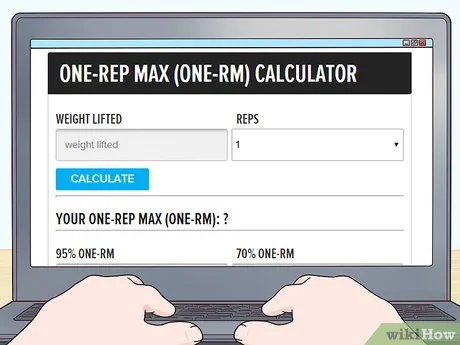
You don’t need to do manual calculations — online converters make it effortless. Simply enter your lifted weight and reps, and you’ll get your 1RM instantly.
Try it now: Use the Max Rep Converter
It’s fast, accurate, and ideal for both home workouts and professional gyms.
Conclusion
The Max Rep Converter is an indispensable tool for modern lifters. It provides accurate strength estimations, enhances training precision, and ensures safety. By using this simple yet effective tool, you can plan smarter, train efficiently, and achieve your goals faster.
In a world where progress depends on precision, the Max Rep Converter empowers athletes to train with confidence and data-driven insight — without the risks of maximal lifts.