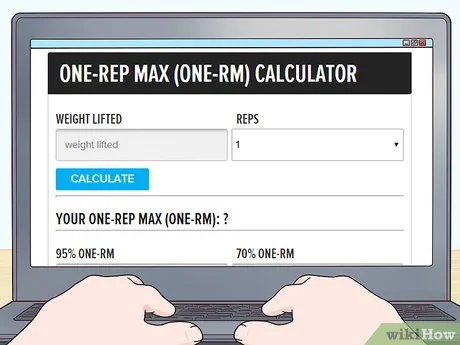
Strength training and resistance programs often revolve around one central concept — the one-repetition maximum (1RM). It serves as the gold standard for assessing an individual’s maximal strength in a given exercise. However, directly testing one-rep max estimator can be time-consuming, physically taxing, and, in some cases, risky. That’s where 1RM estimators come in — offering a practical, safer, and efficient way to estimate maximum strength without pushing to absolute limits.
This article provides an in-depth overview of the 1RM estimator, its methods, applications, accuracy, and best practices.
What Is a One-Rep Max Estimator (1RM)?
The one-repetition maximum (1RM) is the maximum amount of weight an individual can lift for one complete repetition of a given exercise, such as the squat, bench press, or deadlift. It is the benchmark measure of muscular strength and forms the basis for determining appropriate training loads in resistance programs.
Why 1RM Matters
The 1RM serves multiple purposes in both research and practical settings:
- Performance Assessment: Evaluates an athlete’s current strength level.
- Training Prescription: Helps design progressive overload programs.
- Progress Tracking: Quantifies improvements over time.
- Competition Preparation: Determines appropriate attempt weights for powerlifters or weightlifters.
However, directly testing the 1RM can be demanding and may not be suitable for beginners or individuals with certain health limitations. This is why 1RM estimation has become a valuable alternative.
The Concept of 1RM (One-Rep Max) Estimator
What Is a 1RM Estimator?
A 1RM estimator is a formula or method used to predict an athlete’s maximal strength based on submaximal lifting performance. Instead of lifting a maximal load, the individual performs a lighter weight for multiple repetitions — and the estimator calculates what their 1RM would approximately be.
For example, if someone performs 8 repetitions of 80 kg on the bench press, a 1RM formula can estimate what their single-rep maximum might be (often around 100 kg, depending on the formula used).
Advantages of Estimating 1RM
Estimating 1RM has several benefits:
- Safety: Reduces the risk of injury from maximal attempts.
- Efficiency: Saves time in testing sessions.
- Accessibility: Suitable for all fitness levels.
- Convenience: Requires only submaximal loads and basic calculations.
Common 1RM Estimation Formulas
Over the years, various researchers and coaches have developed equations to estimate the 1RM. While each formula has its nuances, they share a common goal: providing a reliable prediction of maximal strength.
1. The Epley Formula
Formula:
1RM = W × (1 + 0.0333 × R)
Where:
- W = weight lifted
- R = number of repetitions performed (up to failure)
Example:
If you lifted 80 kg for 8 reps:
1RM = 80 × (1 + 0.0333 × 8)
1RM ≈ 101.3 kg
The Epley formula is among the most widely used due to its simplicity and strong correlation with actual maximal tests for moderate rep ranges (1–10 reps).
2. The Brzycki Formula
Formula:
1RM = W × (36 / (37 – R))
Example:
If you lifted 70 kg for 10 reps:
1RM = 70 × (36 / 27)
1RM ≈ 93.3 kg
The Brzycki formula is particularly accurate for lower repetition ranges (≤10 reps) and is popular in both athletic and general fitness settings.
3. The Lombardi Formula
Formula:
1RM = W × R^0.10
This formula uses an exponential approach, making it slightly different from linear models like Epley and Brzycki. It is often considered more accurate for higher-repetition sets.
4. The O’Conner Formula
Formula:
1RM = W × (1 + 0.025 × R)
This equation assumes a smaller increase per repetition compared to Epley’s, making it more conservative. It’s often used for beginners or rehabilitation clients where overestimation could pose a risk.
Comparing Accuracy and Limitations
Factors Affecting Estimation Accuracy
While 1RM estimators are useful, they are not foolproof. Several factors can influence their accuracy:
- Exercise Type: Multi-joint lifts (like squats) tend to produce more accurate estimates than isolation exercises (like bicep curls).
- Repetition Range: Most formulas are validated for 1–10 reps. Beyond that, accuracy decreases significantly.
- Training Experience: Novices may struggle with consistent form at near-max loads, affecting reliability.
- Fatigue and Recovery: Testing under fatigue can skew results.
- Technique and Motivation: Proper execution and effort level are crucial for consistent outcomes.
Choosing the Right Formula
No single equation works best for everyone. Coaches often recommend testing multiple formulas and comparing the results to find an individual’s average or most accurate predictor.
For example:
If the Epley and Brzycki formulas produce 1RM estimates of 100 kg and 98 kg respectively, taking the average (99 kg) provides a reasonable working value.
Applications of 1RM Estimation in Training
1. Program Design and Load Prescription
Training loads are often expressed as a percentage of 1RM. For example:
- Strength training: 85–100% of 1RM
- Hypertrophy training: 65–85% of 1RM
- Endurance training: 50–65% of 1RM
Estimating 1RM allows coaches to set precise intensities for various goals.
2. Progress Monitoring
Regularly re-estimating 1RM enables athletes to monitor improvements over time without frequent maximal testing. If an athlete’s estimated 1RM rises from 100 kg to 110 kg, it reflects a tangible strength gain.
3. Periodization and Recovery Management
By tracking estimated 1RM trends, coaches can identify periods of overtraining, plateaus, or peak performance, helping to adjust workload and recovery schedules accordingly.
Practical Steps for Using a 1RM (One-Rep Max) Estimator
Step 1: Select a Submaximal Load
Choose a weight you can lift for 5–10 repetitions with proper form.
Step 2: Perform the Exercise to Failure
Execute as many controlled reps as possible until you can no longer maintain form.
Step 3: Apply a Formula
Insert your data (weight and repetitions) into one or more of the formulas mentioned.
Step 4: Calculate Training Percentages
Use your estimated 1RM to set training loads based on your specific goals.
Step 5: Reassess Regularly
Recalculate your 1RM every 4–6 weeks to track progress and adjust intensities.
Limitations and Safety Considerations
H4: Avoid Overreliance on Estimates
Estimation formulas provide guidelines, not absolute values. Always monitor how your body responds to prescribed loads.
H4: Warm-Up and Technique First
Improper form during submaximal testing can lead to injury or skewed data. Prioritize movement quality.
H4: Individual Variation
Physiological differences such as muscle fiber composition and fatigue resistance mean two individuals can have different 1RM values even with similar submaximal performances.
Conclusion
The 1RM estimator is a powerful tool for athletes, coaches, and fitness enthusiasts seeking to measure and manage strength effectively. By using validated formulas such as Epley, Brzycki, Lombardi, or O’Conner, individuals can accurately predict maximal loads, personalize training programs, and track progress — all while minimizing the risk of injury associated with direct maximal testing.
Ultimately, while no formula replaces hands-on experience or proper technique, 1RM estimation provides a practical balance between safety, efficiency, and performance insight — making it an essential part of modern strength training science.